|

- UID
- 17
- 帖子
- 45651
- 精華
- 1
- 閱讀權限
- 10
- 來自
- India
- 在線時間
- 10363 小時
- 註冊時間
- 12-7-2009
- 最後登錄
- 23-7-2020
|
Ford Powershift versus Volkswagen DSG
Thanks for visiting Driving Spirit! If you're new here, you may want to subscribe to our RSS feed or check out the other Subscribe options on the right to keep up to date with all of our hot hatch news.
The new dual-clutch Ford Powershift transmission has finally made an appearance in the blue-oval’s own range. Powershift was made available to Volvo earlier in the year, but now Ford have seen fit to bring it in as an option on the Focus with the 108bhp and 134bhp TDCi engines.
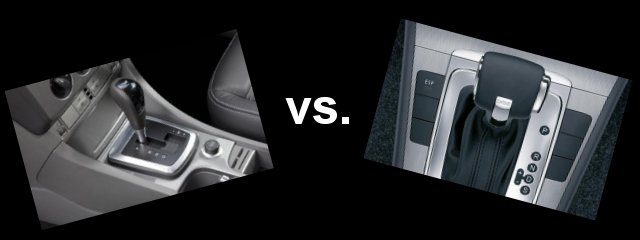
Using the same technology that has proven so successful with Volkswagen’s DSG transmission, the Powershift has two clutches, one covering the ‘odd’ gears and the other taking care of the ‘even’. This means that gearchanges are executed quickly and smoothly, with very little interruption to the torque flow. So, given that Ford will have closely examined Volkswagen’s system and have spent considerable time perfecting their design before bringing it to market, it must be better than Volkswagen’s system. Right?
The Ford Powershift system is better, but that depends on what you say it’s ‘better than…’. It is certainly an improvement over a traditional automatic gearbox. Gear changes are faster and smoother than the auto, and that means you get better acceleration times and improved fuel economy. But before we get all excited, just compare the following sets of data that compare the manual and dual-clutch versions of the Ford Focus and Volkswagen Golf.Model 0-62mph (sec) Combined EU MPG CO2 g/km
Ford Focus 2.0 TDCi, Manual 9.3 51.3 144
Ford Focus 2.0 TDCi, Powershift 9.6 48.6 154
Model 0-60mph (sec) Combined EU MPG CO2 g/km
Volkswagen Golf GTI, Manual 7.2 35.3 189
Volkswagen Golf GTI, DSG 6.9 35.8 188
In terms of price Ford have the advantage, with Powershift costing £1,175 (inclusive of VAT) as an option whereas DSG costs more at £1,330. However, judging by the benefits of DSG to the driving experience I’d say it’s worth the extra £155.
Volkswagen are already onto their second version of the DSG gearbox, and have produced over a million units to date. They are planning to add DSG as an option to most cars in their range, even the little Polo, and you can see why. The DSG makes the car quicker, more economical and crucially gives it a lower CO2 output. All of these things are big selling points, but none of them apply to Ford’s Powershift system.
For hot hatch drivers the DSG gearbox on a Golf GTI is great – flappy paddles behind the wheel mean it’s easy to use, and the improved acceleration times are obviously a big plus when it comes to bragging rights. Ford, on the other hand, don’t even offer paddles as an option, claiming that their buyers don’t want them – er, is that right? If you were buying a Focus ST with a dual-clutch system, wouldn’t you want flappy paddles? Not that you would buy an ST with Powershift, because of course it would end up slower than the manual.
The only buyer this system makes real sense for is someone who wants a traditional clutchless auto, but that’s a fairly small segment of the market. Sadly, for folks who were hoping that Powershift would add some nifty performance-enhancing technology to the range, this will be something of a disappointment.
Sorry Ford, nice try but you need to get back to the drawing board. |
|


 發表於 20-8-2009 14:04
|
發表於 20-8-2009 14:04
|